
Many Americans are waking up to a sobering fact: they likely have far less saved for retirement than they think. Recent data paint a stark picture. Vanguard reports that in 2023, the median (middle) U.S. retirement balance was only about $35,300 – even though the average is significantly higher, at approximately $134,000 (skewed by a few very wealthy savers) (Vanguard). In other words, half of U.S. households have less than ~$35k saved in retirement accounts. No wonder so many feel behind schedule. A Bankrate survey found 57% of workers say they’re already “behind” on their retirement savings (and 35% of those feel significantly behind). To make matters worse, many experts estimate that most middle-class Americans will need $1 million or more to retire comfortably. In fact, Bankrate’s poll shows the typical worker thinks they’ll need about $875,000, and 35% expect they’ll need over $1 million.
- Only about 31% of Americans feel their retirement savings are “on track.” A Federal Reserve survey found 72% of adults have some retirement savings, but just 31% feel they have saved enough.
- Median vs. average gap. The median 2023 retirement balance is ~$35K, but the average is ~$134K (Vanguard).
- Most workers feel behind. Over 57% of U.S. workers report being behind their savings goals (Bankrate).
For example, consider a couple profiled in Apple News. They initially planned to work until 65, saving slowly in their 401(k)s. Then they discovered the FIRE (Financial Independence, Retire Early) mindset and shifted focus: “Retirement wasn’t an age but a number,” they realized. They set a goal of $1.2 million, which, using the 4% withdrawal rule, translates to approximately $48,000 per year in income. To reach this goal sooner, they even invested in rental properties (needing roughly 20 rentals earning $200/month each to generate that income). Their experience highlights two key points: many people discover they need a nest egg in the seven-figure range, and some turn to creative planning to bridge the gap.
Retirement Savings by Age
How does the average U.S. retirement balance grow over a lifetime? Vanguard’s latest data show savings do increase with age, but not as fast as many people might expect:
| Age Group | Average Retirement Balance |
|---|---|
| Under 25 | $7,351 |
| 25–34 | $37,557 |
| 35–44 | $91,281 |
| 45–54 | $168,646 |
| 55–64 | $244,750 |
| 65+ | $272,588 |
Source: Vanguard How America Saves 2023)
Even by age 65+, the average balance is only approximately $ 273,000. The median balance at 65+ is just around $ 88,000 – meaning that half of the people in their late 60s have less than that in their retirement accounts. Younger age groups have much smaller nests: under age 35, the average is only about $ 37,000, so many 30-somethings are far below the $ 200,000+ that some experts recommend having by age 40.
The Underfunded Retirement Gap
Why does this matter? Failing to save can force people to delay retirement or significantly reduce their spending. Indeed, the same surveys reflect growing anxiety: 48% of workers don’t think they’ll ever save as much as they believe they’ll need (Bankrate). Meanwhile, social programs are under strain – 87% of workers plan to rely on Social Security, yet many worry about future benefit cuts (EBRI/Greenwald Survey). Add high inflation and rising healthcare costs into the mix, and it’s clear why so many Americans fear running out of money in retirement.
These data make one thing clear: Retirement planning can’t be left to hope. Market volatility, inflation spikes, and unexpected expenses can derail even the most straightforward projections. Instead, financial advisors now use Monte Carlo models to stress-test plans against thousands of scenarios.
Bridging the Shortfall with Planning
If you’re reading this as a pre-retiree, the question is not just “how much have I saved?” but “is my plan realistic and robust enough?” The first step is awareness: know where you stand relative to averages and goals. The second step is action: adjust your saving, spending, or timeline accordingly.
Here are some takeaways for pre-retirees:
- Acknowledge the gap. If you have far less than the average for your age (see table above), it’s not hopeless – but it does mean you may need to work longer or save more aggressively from now on.
- Boost your savings rate. Many experts suggest saving 15–20% of pre-tax income, especially if you’re behind. Take full advantage of any employer match, and consider catch-up contributions once you hit 50.
- Diversify income streams. Don’t rely solely on investments. Consider part-time work, rental income, or phased retirement to supplement your portfolio.
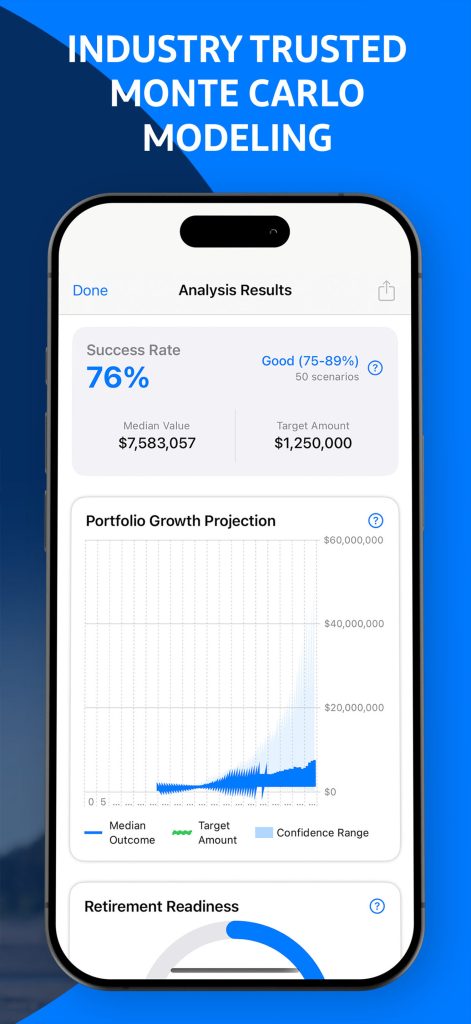
- Stress-test your plan. Use realistic modeling. Try running your numbers through a Monte Carlo simulator, such as the Retirement Success Graph app, to see how different market, inflation, or spending scenarios affect your outlook.
Take Charge of Your Retirement Future
Even if you feel behind, acting now can make a huge difference. If you’re concerned about your trajectory, download the Retirement Success Graph app on your iPhone. It runs thousands of market scenarios against your inputs and tells you the probability your savings will last. In short, it can help you determine if your retirement plan is on track or requires adjustments.
By playing “what-if” with the app, you can see how steps like saving more, retiring later, or changing withdrawal rates would impact your success rate. It transforms vague worry into concrete probabilities.
Don’t wait – take control of your retirement today. Download the Retirement Success Graph app and see if your retirement plan is on pace. Most Americans fall short of retirement savings goals. See how your balance compares by age, why the gap matters, and how to test your plan with Retirement Success Graph.